Rootless Edge Deployments: Architektur daemonloser CI/CD-Pipelines mit Podman und Buildah
Quick answer
Bypassing docker.sock: Daemonless Pipeline Orchestration : webhook testing answer
For local webhook testing, run your app locally, expose it with a public HTTPS tunnel, and paste the stable callback URL into the provider dashboard.
How do I test webhooks on localhost?
Start your local server, open a public HTTPS tunnel to that port, configure the provider webhook URL, and inspect events in your local logs.
Why does a stable webhook URL matter?
Stable URLs prevent provider dashboards from needing manual callback updates every time you restart a tunnel.
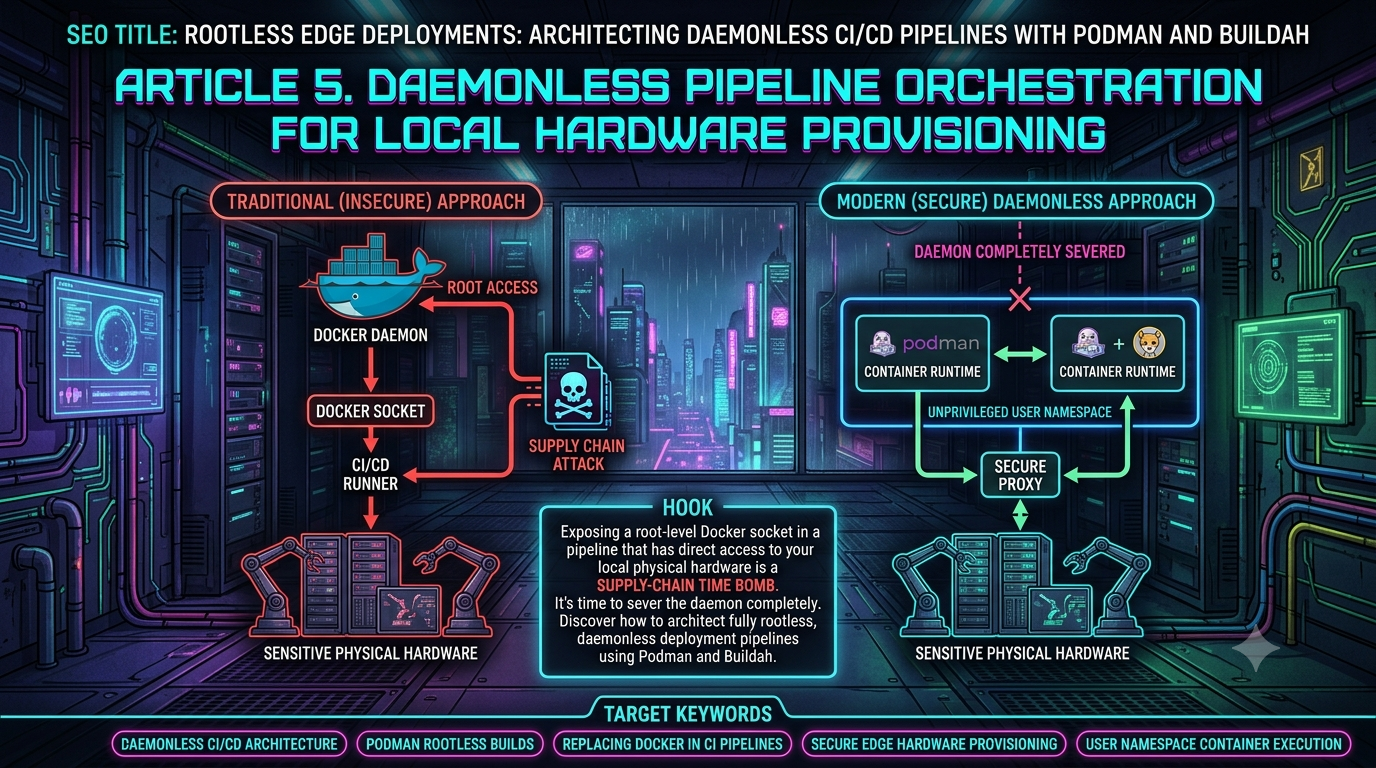
Exposing a root-level Docker socket in a pipeline that has direct access to your local physical hardware is a supply-chain time bomb. It’s time to sever the daemon completely. Here’s how to architect fully rootless, daemonless deployment pipelines using Podman and Buildah — and what’s actually changed in the rootless container ecosystem through mid-2026.
1. Die Schwachstelle des geteilten Sockets
In traditionellen CI/CD-Umgebungen hat die Abhängigkeit von Docker ein weit verbreitetes architektonisches Anti-Pattern etabliert: Das Mounten des root-level Docker daemon socket (/var/run/docker.sock) direkt in Pipeline-Läufer. Oft als Docker-in-Docker (DinD) oder Socket-Mounting bezeichnet, gewährt dieses Muster dem Läuferprozess volle administrative Zugriffsrechte auf die Host-Engine. Es ist praktisch für das Erstellen, Taggen und Pushen von OCI-Images, stellt aber ein erhebliches Sicherheitsrisiko in Pipelines dar, die lokale Hardware, Edge-Gateways oder lokale Proxys provisionieren.
[ Kompromittierter CI/CD-Läufer-Komponente ]
                │
                ▼ (Führt bösartigen Payload aus)
   [ /var/run/docker.sock API-Aufruf ]
                │
                ▼ (Eskalation sofort auf Host-Root)
[ Physische Edge-Hardware / Host-OS-Ressourcen kompromittiert ]
Wenn eine Pipeline einen expliziten Zugriff auf physische Geräte hat — IIoT-Schnittstellen, SCADA-Netzwerke, medizinische Systeme oder Edge-AI-Knoten — ist ein Container-Escape kein softwareseitiger Fehler vor Ort. Es ist ein Vektor für cyber-physische Schäden. Da dockerd nativ als root läuft, kann jeder Prozess, der seine unverschlüsselte UNIX-Socket erreicht, beliebige API-Aufrufe ausführen: docker run --privileged -v /:/host von einer kompromittierten Abhängigkeit reicht aus, um das Host-Betriebssystem vollständig zu kompromittieren.
Das ist kein hypothetisches Szenario. CVE-2024-21626 (
Related InstaTunnel pages
Continue from this article into the most relevant product guides and workflows.
Related Topics
Keep building with InstaTunnel
Read the docs for implementation details or compare plans before you ship.